
Provide All Products Your Needs
Piston Air-cooled Air Compressor
Reciprocating Air Compressor / Piston Air Compressor


Provide All Products Your Needs
Piston Water-cooled Air Compressor
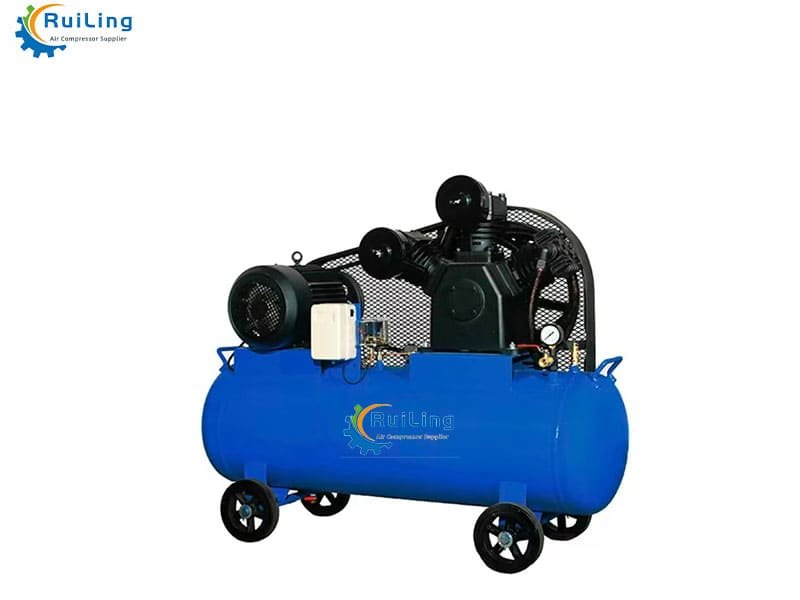
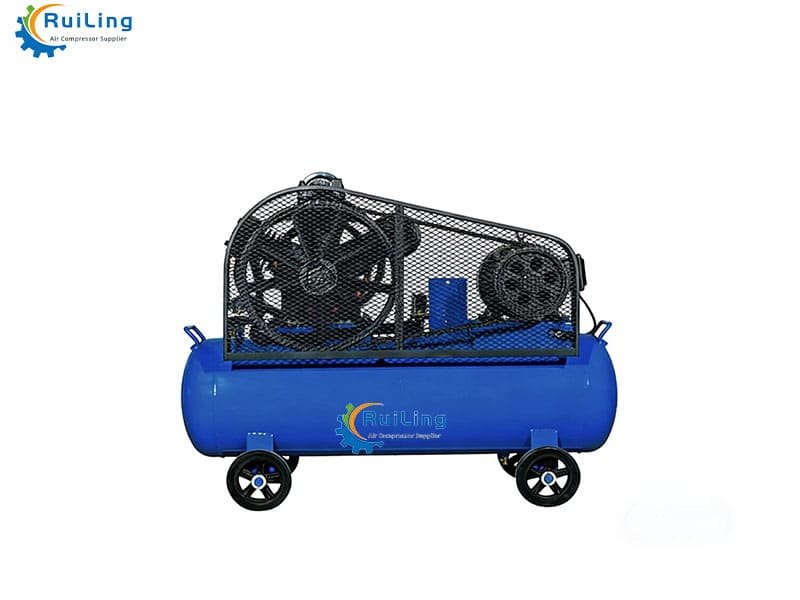
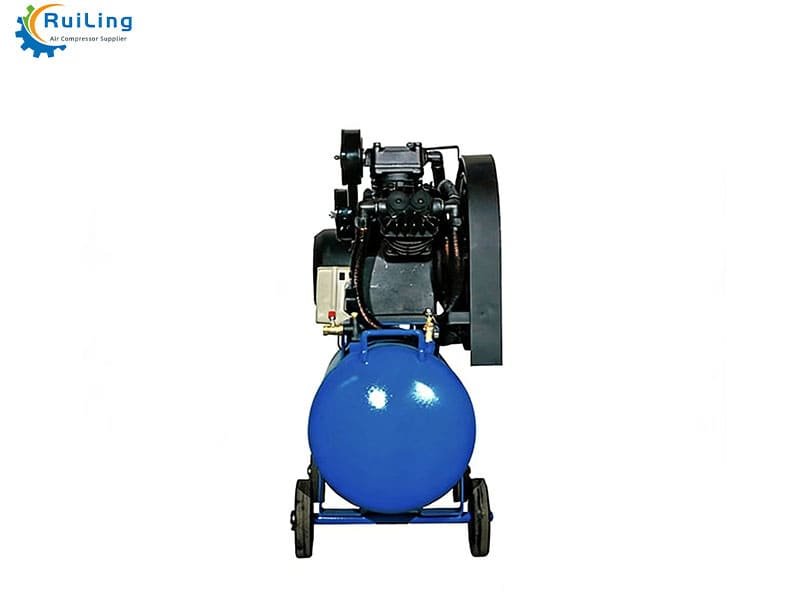
About RUILING Air Compressor
Piston Air Compressor
Advantages
Designed to power impact wrenches, tire inflators, spray guns, and air tools with consistent performance.
CONTACT US
Top air compressor Suppliers from China
Address:
Floor 10, Unit 2, Building A10, Lushang Center, Lanshan District Linyi City, Shandong Province. China.
Understanding the Piston Air Compressor: A Simple Guide
Product Positioning: The Reliable Partner for Small-Scale Air Demand
In the large family of industrial compressed air, the piston air compressor is the most traditional and widespread type. Unlike screw compressors that pursue 24/7 continuous operation, or centrifugal compressors that serve mega-factories, it has an irreplaceable position in its own domain.
If you run an auto repair shop needing power for impact wrenches and tire inflation; if you have a home woodworking shop requiring spray guns and pneumatic nailers; if you’re a small construction team needing temporary air on site—then a reliable piston compressor is your most practical choice.
Our piston compressor series adheres to the design philosophy of simple, durable, and easy to maintain, specifically crafted for intermittent use and small-scale operations. No complex control systems, no delicate precision components—just solid steel construction and reliable, long-lasting quality.
As a classic Piston Air Compressor, it has served millions of users worldwide, proving its value in the simplest way.
How Piston Compressors Work
The working principle of a piston compressor can be understood through a simple analogy: it’s like a scaled-up internal combustion engine, but in reverse.
Operating Cycle:
Intake Stroke: Piston moves downward, creating negative pressure in the cylinder; intake valve opens, air is drawn into the cylinder
Compression Stroke: Piston moves upward, intake valve closes; air is compressed, pressure increases
Discharge Stroke: When pressure reaches the set value, discharge valve opens; compressed air enters the tank
This reciprocating process repeats like a heartbeat, converting atmospheric air into pressurized compressed air stored in the tank for later use.
Core Components:
Crankcase: Supports the entire moving mechanism
Crankshaft and Connecting Rod: Converts motor rotation into piston reciprocation
Piston Rings: Seal the cylinder, preventing compressed air leakage
Cylinder Head: Houses intake and discharge valves
Air Tank: Stores compressed air, buffers pressure fluctuations
This simple, reliable structure inherently gives piston compressors the natural advantages of easy maintenance and low repair costs.
Core Advantages: Why Choose a Piston Compressor?
1. Affordable Price, Low Investment Barrier
Compared to screw compressors, piston units are much more budget-friendly. For individual users and small businesses with limited budgets, this is a major advantage. A small piston compressor may cost only one-third to one-half of an equivalent-displacement screw model.
Take our PA-2.0/100 model as an example—a 2HP unit with a 100-liter tank meets the daily air needs of a small repair shop, with an investment of just a few hundred dollars.
2. Simple Structure, Easy Maintenance
Piston compressors have a very simple design—no complex control systems. Anyone with basic mechanical knowledge can perform routine maintenance.
Daily Maintenance:
Check Oil Level: Inspect before each use, ensure adequate lubrication
Drain Condensate: Drain accumulated water from tank bottom after daily use
Clean Filter: Monthly cleaning or replacement of air filter
Common Repairs:
Replacing piston rings
Lapping valve plates
Replacing belts
These repairs can be done at local equipment repair shops without waiting for factory engineers.
3. Ideal for Intermittent Use
The working mode piston compressors excel at is: run for a while, rest for a while. Like a heart, they start when tank pressure drops and stop when pressure reaches the set value, allowing the motor to rest fully.
For applications with discontinuous air demand—auto repair shops, home workshops—piston compressors are the optimal choice. Each start gives them ample time to cool down, preventing overheating.
4. Wide Pressure Range
Piston compressors can easily achieve high-pressure output. Our multi-stage piston series reaches up to 30bar, 40bar, or even higher for special high-pressure applications:
Blow Molding: PET bottle blowing requires 25-40bar high pressure
High-Pressure Testing: Pipeline and vessel leak testing
Breathing Air Filling: Scuba tank charging
For these high-pressure applications, screw compressors struggle while piston compressors excel.
5. Portable and Flexible
For applications requiring frequent movement, our small piston units have natural advantages. A 1.5HP Small Air Compressor with wheels can be easily pushed by one person and fits effortlessly in a car trunk.
If you need a Mobile Air Compressor, our portable or wheeled piston series is the ideal choice to carry in your vehicle. Whether for roadside assistance, field repairs, or temporary site work, it provides power whenever needed.
Comparison with Screw Compressors
To help you make a more informed choice, here’s a comprehensive comparison:
| Aspect | Piston Compressor | Screw Compressor |
|---|---|---|
| Operating Mode | Intermittent use, 1-4 hours daily | Continuous use, 8-24 hours daily |
| Initial Investment | Low (1/3 to 1/2 of screw price) | High |
| Maintenance Cost | Low, local parts available | Higher, needs original filters and oil |
| Maintenance Frequency | Frequent (oil change every 500 hours) | Lower (oil change every 2000-4000 hours) |
| Noise Level | Higher (85-95dB) | Lower (70-80dB) |
| Vibration | Higher, needs secure mounting | Low, smooth operation |
| Discharge Temperature | Higher | Lower |
| Oil Carryover | Higher (needs efficient filtration) | Lower (oil-flooded models) |
| Lifespan | 10-15 years (with periodic overhaul) | 15-20 years (longer overhaul cycles) |
| Typical Power Range | 0.5-30HP | 5-500HP |
Application Scenarios
1. Auto Repair and Maintenance
This is the most classic application for piston compressors:
Tire Inflation: Filling car and truck tires
Impact Wrenches: Removing and tightening lug nuts, chassis bolts
Pneumatic Jacks: Lifting vehicles
Spray Painting: Body touch-up painting
Blow-Off: Cleaning engine bays, air filters
Recommended Models: PA-2.0/100 or PA-3.0/100—2-3HP, 100-liter tank, sufficient for daily repair needs.
2. Home Workshops and DIY
More and more enthusiasts have their own woodworking or metalworking shops:
Nail Guns: Furniture making, frame assembly
Spray Guns: Furniture refinishing, model painting
Pneumatic Sanders: Sanding wood and metal
Pneumatic Engravers: DIY engraving
Recommended Models: PA-1.5/50 or PA-2.0O/50—1.5-2HP, 50-liter tank, compact and space-saving.
3. Small Construction Projects
On-site air for renovation crews and small project teams:
Nail Guns: Woodwork, flooring installation
Breakers: Small demolition work
Sprayers: Wall surface coating
For teams that frequently relocate, wheeled portable models are ideal. Our PA-2.0/100W model features solid rubber wheels and a handle—easily towed by one person.
4. High-Pressure Special Applications
For situations requiring high-pressure air:
PET Blow Molding: Producing water and beverage bottles
Pipeline Pressure Testing: Checking seal integrity
Scuba Tank Filling: Charging tanks for diving enthusiasts
Recommended Models: PA-HP series—3.0-10HP, up to 40bar pressure, meeting high-pressure requirements.
5. Laboratory and Medical
For applications with air quality requirements, oil-free piston units are ideal:
Laboratory Air Supply: Driving pneumatic valves, purging instruments
Dental Clinics: Powering drills, scalers
Pharmaceutical Workshops: Small-scale process air
Recommended Models: PA-1.5O/50 oil-free series—pure, oil-free output meeting hygienic standards.
Intelligent Control System
Though piston compressors have simple construction, we equip them with practical control systems for convenient and safe operation:
Standard Features
Pressure Switch: Automatically controls motor start/stop—stops at upper pressure limit, starts below lower limit
Safety Valve: Automatically releases if pressure exceeds limits, ensuring safety
Pressure Gauge: Real-time display of tank pressure
Drain Valve: Tank bottom drain for condensate removal
Overload Protector: Automatically cuts power if motor overheats or overloads
Optional Upgrades
Magnetic Starter: More reliable motor protection
Hour Meter: Tracks operating hours for maintenance planning
Auto Drain: Timed automatic condensate drain, eliminating manual operation
Quality Assurance and Testing Standards
Core Components
| Component | Material/Brand | Description |
|---|---|---|
| Cylinder | High-phosphorus cast iron | Good wear resistance, long life |
| Piston Rings | Alloy cast iron | Good sealing, minimal leakage |
| Crankshaft | Ductile iron | High strength, fracture resistant |
| Connecting Rod | Forged aluminum/ductile iron | Lightweight design, reduced vibration |
| Valves | Stainless steel plates | Impact resistant, long life |
| Air Tank | Q235B carbon steel | Manufactured to GB150 standard |
Testing Standards
Every piston compressor must pass these tests before shipment:
2-Hour Break-In Test: New unit run-in, checked for abnormal noise
Pressure Test: Tank hydrostatically tested at 1.5 times working pressure
Leak Test: 15-minute pressure hold, drop ≤0.2bar
Safety Valve Calibration: Correct opening pressure, proper reseating
Electrical Safety Test:合格 ground resistance and insulation resistance
IX. Selection Guide and Frequently Asked Questions
How to Choose the Right Piston Compressor?
Step 1: Identify Your Tools
List all pneumatic tools you use simultaneously and calculate their air consumption:
| Tool | Consumption(L/min) | Usage Pattern |
|---|---|---|
| Tire inflator | 30-50 | Intermittent |
| Impact wrench (1/2″) | 120-180 | Frequent |
| Spray gun | 150-250 | Continuous |
| Nail gun | 50-100 | Intermittent |
| Breaker | 300-500 | Continuous |
Step 2: Calculate Total Demand
Add consumption of all simultaneously used tools, multiply by 1.2-1.3 safety factor.
Example: Impact wrench (150L/min) + spray gun (200L/min) running together = (150+200)×1.2 = 420L/min
Step 3: Select Model
Based on calculated demand, choose a model with slightly higher displacement. Also consider tank size—larger tanks mean less frequent motor starts.
Frequently Asked Questions
Q1: How long can a piston compressor run continuously?
A1: Piston compressors are designed for intermittent operation. Generally, duty cycle should not exceed 50%—run 5-10 minutes, then rest 5-10 minutes to cool. For extended continuous use, consider screw compressors.
Q2: Why must condensate be drained daily?
A2: Moisture in air condenses during compression, accumulating at tank bottom. If not drained promptly, it causes: ① Tank interior rust and corrosion; ② Moisture entering air lines and tools; ③ Freezing in winter blocking lines.
Q3: Why are piston compressors louder than screw types?
A3: The working principle inherently involves reciprocating motion with periodic impact and vibration. Additionally, valve plate opening/closing creates pulsation noise. This is normal and can be reduced with silencers and vibration pads.
Q4: What’s the difference between oil-free and oil-lubricated piston compressors?
A4: Oil-lubricated units need lubricating oil in cylinders, so output air contains small amounts of oil—suitable for oil-tolerant applications. Oil-free units use self-lubricating piston rings (e.g., Teflon)—no oil in cylinders, pure output air ideal for painting, medical, food, and other oil-sensitive applications.
Q5: Do piston compressors need periodic overhaul?
A5: Yes. After certain operating hours (typically 2000-3000), wear parts like piston rings, cylinder liners, and valve plates wear out and need replacement during overhaul. This is normal maintenance, costing far less than a new machine.
Quick Quote
RuiLing Blog
We provide real-time explanations of air compressor products and industry news.
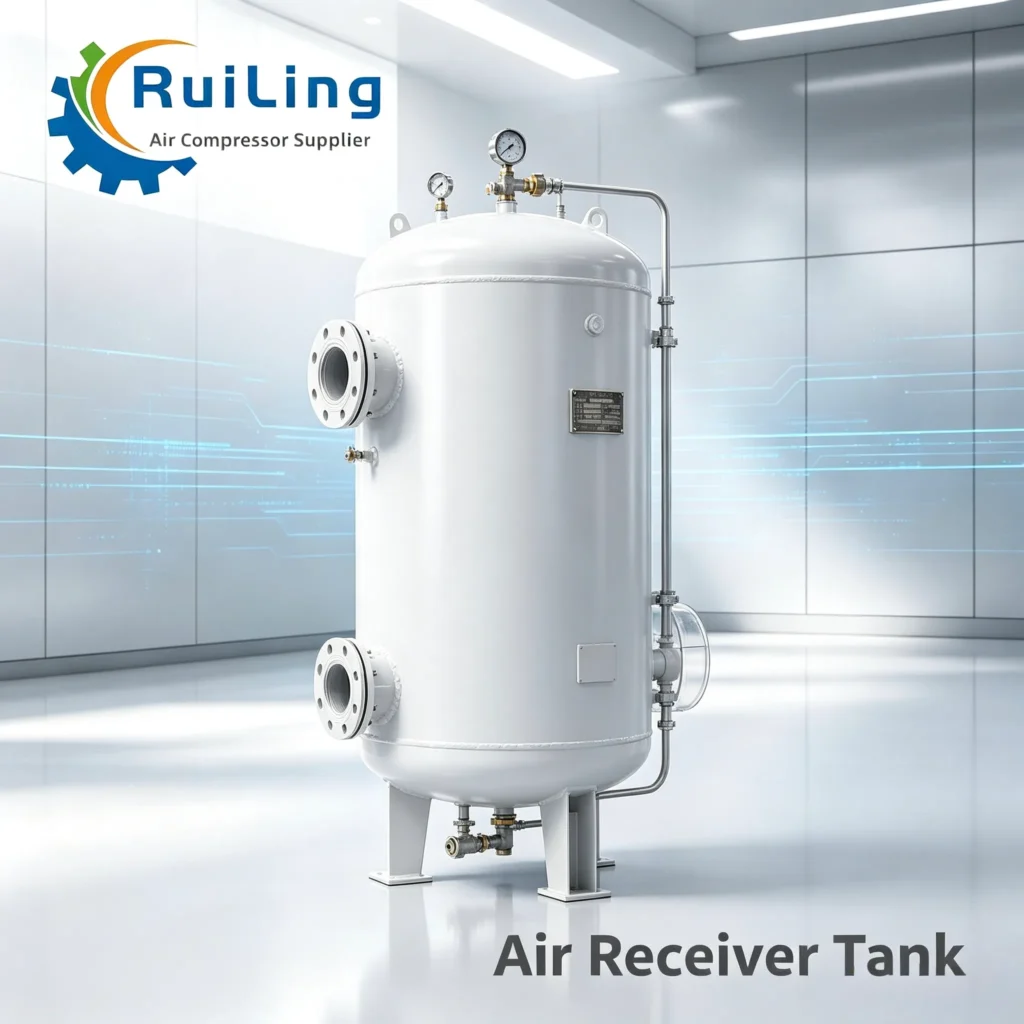
Working Principle of an Air Compressor Air Receiver Tank: A Complete Guide
Every compressed air system needs a buffer between the compressor and the tools it powers. That buffer is the Air […]
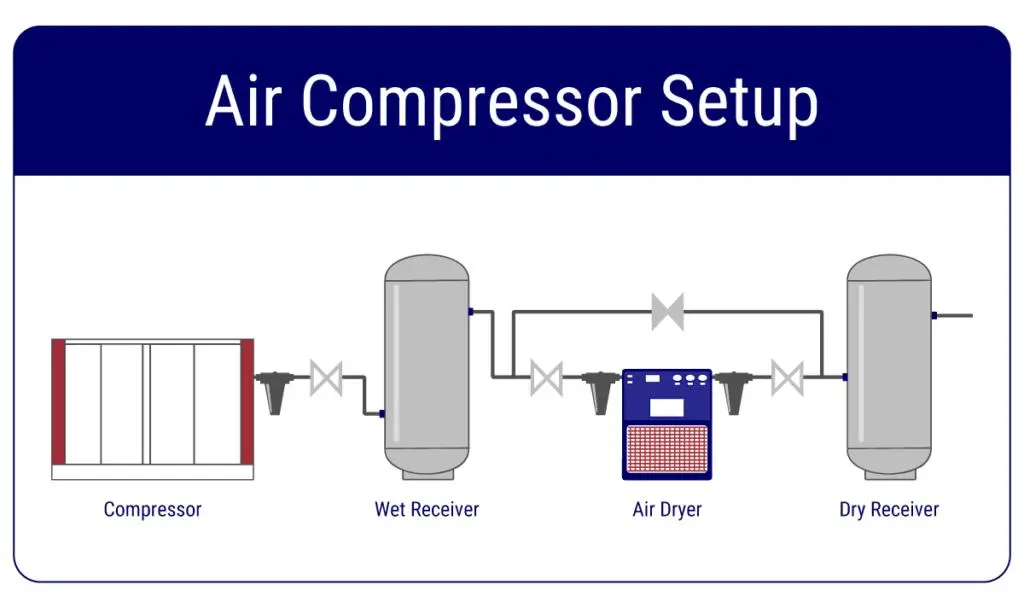
Working Principle of Air Dryers for Air Compressors: A Complete Guide
Compressed air naturally contains moisture. When air is compressed, its temperature rises, allowing it to hold more water vapor. As […]
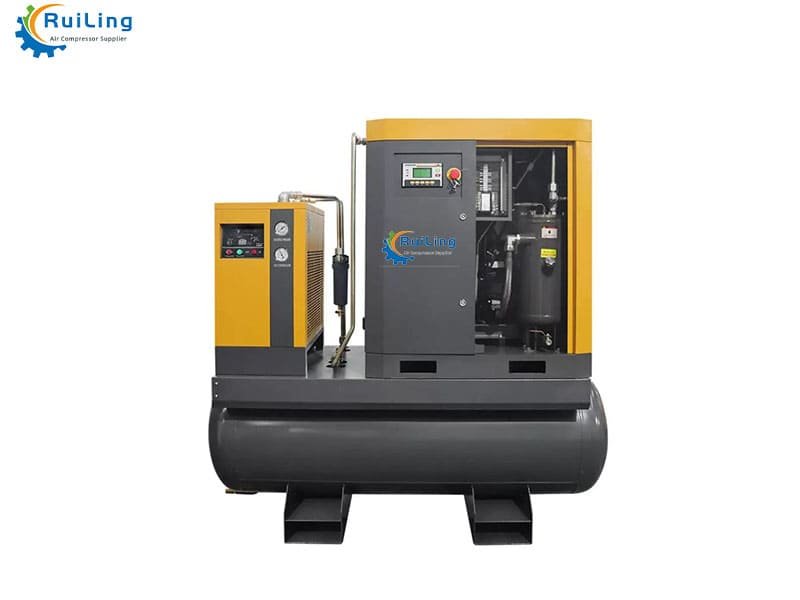
Applications of Air Compressors for Laser Cutting: Ensuring Precision and Efficiency
Modern laser cutting relies on more than just a powerful beam. Behind every clean, precise cut sits a reliable Air Compressors […]