
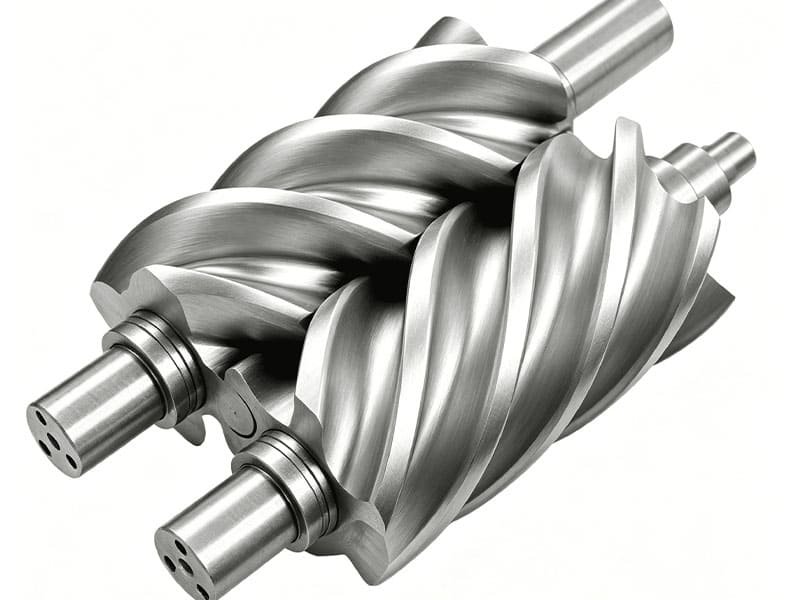
At the heart of every rotary screw unit lies a precision component that makes compression possible. That component is the screw air compressor rotor. These paired, helical-shaped parts interlock and spin together, trapping air and reducing its volume to create pressure. Without these finely machined parts, modern pneumatic systems could not deliver steady, pulse-free flow that industries need daily.
Let us take a closer look at what these components do and why they matter so much.
Why the Rotor Pair Matters
Understanding this part helps you appreciate how your equipment works and why maintenance matters. The screw air compressor rotor set consists of two mating parts: a male rotor and a female rotor.
The male rotor typically has fewer lobes than the female rotor has flutes. As they rotate together, air moves along the axis from the inlet to the discharge. The space between the rotors progressively decreases, compressing the trapped air. This simple yet elegant design delivers smooth, vibration-free operation.
Before we dive deeper, let us examine how this component fits into the larger system.
How a Screw Air Compressor Rotor Works
The operation of a screw air compressor rotor follows a consistent, predictable cycle.
The Four Stages of Compression
First, air enters the inlet port as the rotors turn. The male and female rotors unmesh at the inlet side, creating an expanding cavity that draws air in.
Second, as rotation continues, the rotors close off the inlet port, trapping a fixed volume of air between the rotor flutes and the housing.
Third, further rotation reduces the cavity volume, compressing the trapped air to higher pressure. Fourth, when the rotors reach the discharge port, the compressed air exits the unit.
This continuous process happens thousands of times per minute. The result is a steady stream of compressed air without the pulsing that characterizes piston machines.
Timing Gears and Clearance
In oil-injected designs, the screw air compressor rotor does not rely on timing gears. One rotor directly drives the other through the oil film that separates them. In oil-free machines, timing gears ensure the rotors never touch each other or the housing. This distinction affects both design complexity and the air purity the unit delivers.
Now that we understand the basic operation, let us look at the different rotor configurations available.
Types of Rotor Designs
Not all rotors share the same profile or construction. The design choices affect performance, efficiency, and application suitability.
Male and Female Rotor Profiles
The shape of the screw air compressor rotor profile has evolved significantly over decades. Early designs used symmetrical profiles.
Modern asymmetric profiles deliver better efficiency by reducing internal leakage. The male rotor drives the female rotor in oil-injected units. The precise matching of these profiles determines how effectively the unit compresses air.
Coatings and Surface Treatments
Many rotors receive special coatings to improve performance. An industrial air compressor operating in harsh conditions may benefit from coatings that resist corrosion. Oil-free units require permanent coatings like PTFE to reduce friction and maintain sealing without liquid lubricant. These treatments extend service life and maintain efficiency over thousands of operating hours.
Materials and Manufacturing
High-quality rotors start with quality materials. Ductile iron provides strength and wear resistance. Precision machining ensures the profiles match within microns.
Balancing eliminates vibration that would shorten bearing life. The manufacturing tolerances for a screw air compressor rotor rank among the tightest in industrial machinery.
From the rotor itself, let us move to how it fits within the complete system.
The Rotor as Part of Air Compressor Components
The rotor does not work alone. It functions within a complete set of Air Compressor Components that together deliver compressed air.
The Rotor Housing
The housing surrounds the rotor set with extremely tight clearances. These clearances determine how much air leaks back from the discharge side to the inlet side. Tighter clearances improve efficiency but require better filtration and lubrication. The housing also contains ports for air intake and discharge.
Bearings and Support
Bearings support the rotors and maintain their position within the housing. Radial bearings handle the forces perpendicular to the shaft. Thrust bearings manage axial forces created by air pressure pushing against the rotors. Bearing failure ranks among the most common reasons for rotor replacement.
Sealing Systems
Seals prevent oil from leaking out of the compressor and air from leaking into the environment. Shaft seals where the rotor shafts exit the housing require particular attention. A failed seal leads to oil loss and contamination.
Understanding these supporting parts helps explain why rotor replacement sometimes requires professional expertise.
Special Considerations for Oil-Free Systems
For applications demanding the highest air purity, manufacturers produce units that never introduce oil into the compression chamber.
<H3>Class Zero Air Screw Compressors
The highest standard for oil-free air is class zero air screw compressors. This certification means the compressed air contains no measurable oil contamination. These units use screw air compressor rotor sets with special coatings and timing gears.
These features prevent metal-to-metal contact. Water or specialized coatings provide lubrication instead of oil.
Why Class Zero Matters
Industries like pharmaceutical manufacturing, electronics assembly, and food processing require class zero air screw compressors. Even trace amounts of oil would contaminate products or damage sensitive components. For these applications, the rotor design and coating technology make all the difference.
Now that we have covered the basics, let us discuss common problems and how to avoid them.
Common Rotor Problems and Solutions
Even well-designed rotors eventually show signs of wear. Recognizing these signs helps you plan service before catastrophic failure occurs.
Rotor Wear and Scoring
Contaminants in the air or oil cause abrasive wear on rotor surfaces. You may notice decreased efficiency, higher operating temperatures, or increased oil consumption. Regular oil analysis detects wear metals before visible damage occurs. Preventing contamination through proper filtration remains the best defense.
Coating Degradation
In oil-free units, the permanent coatings eventually wear down. As coatings thin, clearances increase and efficiency drops. Eventually, the rotors may contact each other, causing rapid failure. Scheduled replacement based on runtime hours prevents this scenario.
Bearing Failure
Bad bearings allow rotors to move out of position. Rotor contact follows quickly.
Listen for unusual noises like growling or rumbling from the air end. Unusual vibration also signals bearing trouble. Address bearing issues immediately to save the rotors.
A simple question remains: when should you replace rotors versus replacing the entire unit?
Repair vs. Replacement Decisions
When your screw air compressor rotor set fails, you face a choice. New rotors cost significantly less than a complete compressor. However, rebuilding an old air end makes little sense if the housing or bearings also show wear. Professional inspection helps you make the right call.
For smaller units, replacement often proves more cost-effective. For large industrial air compressor systems, rebuilding the air end typically saves money. Your service provider can guide you based on your specific equipment and operating conditions.
Conclusion
The screw air compressor rotor stands as the core component of any rotary screw system. These precisely machined parts interlock to trap, reduce, and compress air in a continuous, efficient process. Understanding how rotors work helps you appreciate the complexity of your equipment and the importance of proper maintenance.
As critical Air Compressor Components, rotors require clean oil, proper filtration, and regular monitoring. For sensitive applications, Class 0 air screw compressors deliver high purity through special rotor coatings and oil-free designs.
Whether you operate a small workshop compressor or a large industrial compressor, rotor health matters. It affects reliability. It also affects operating costs. Protect them through consistent maintenance, and they will serve you well for years.
Our Facebook:https://www.facebook.com/rlaircompressor.